


Why Visual Literacy Matters in a World of Images

Images no longer ask for our attention. They take it.
A painting in a museum, a film still, a news photograph, an installation view, a scientific scan, a political poster, a street mural, a generated image, a religious icon, a luxury object, a protest sign, a family photograph, a screen full of fragments. Visual culture now shapes how people read power, beauty, truth, memory, status, identity, violence, desire, place, and time.
Visual literacy is the ability to interpret, negotiate, and make meaning from information presented in the form of an image. It is not a decorative skill. It is a form of intelligence. It asks for attention, judgement, patience, cultural awareness, and emotional range.
That is why visual literacy matters. In a world saturated with images, looking is no longer passive. To look well is to think well.

1. Navigating visual information and digital overload
The modern eye works under pressure. It moves across screens, streets, books, cinemas, museums, windows, archives, and devices. It receives more images than it can properly examine. Most are designed for speed. Few ask for depth.
This creates a central problem. The more images appear, the easier it becomes to stop seeing them.
Visual literacy gives structure to looking. It slows perception without making it heavy. It teaches the viewer to ask clear questions before accepting an image at face value.
What is being shown?
What is being left out?
Who made the image?
What is the image asking me to feel?
What choices shaped its composition?
What cultural references does it carry?
What does the medium change?
What would I understand differently if the scale, colour, angle, or context changed?
These questions matter because every image frames reality. A cropped photograph can change a public event. A museum label can alter the status of an object. A film sequence can guide sympathy before a word is spoken. A painting can hold several times at once through gesture, surface, rhythm, and repetition.
Images often persuade before language catches up. Colour can signal danger, wealth, mourning, purity, or celebration, depending on context. Scale can create reverence or unease. A low viewpoint can amplify authority. A blurred edge can suggest memory, speed, or uncertainty. A polished surface can seduce. A broken surface can resist easy reading.
Digital overload makes these effects harder to notice. Images arrive in streams, often detached from origin, material, scale, authorship, and place. A monumental painting becomes a thumbnail. A sacred object appears beside a joke. A documentary image may sit near a fictional render. The screen flattens differences that matter.
This does not mean digital viewing is poor by nature. It means digital viewing needs discipline. Visual literacy helps restore context. It helps the viewer separate immediate sensation from informed response.
A painting seen on a screen may reveal composition, colour relations, and iconography. Yet it may hide surface, proportion, pressure of the hand, material presence, and the way the work occupies space. A sculpture online can show form, but not weight. An installation photograph can document an arrangement, but not the bodily experience of moving through it.
For collectors, curators, and serious viewers, this distinction is essential. An image of an artwork is not the artwork. Documentation is useful, but it is also partial. Visual literacy keeps that difference alive.
It also protects attention. The educated eye does not simply consume more images. It makes better distinctions among them. It knows when to pause, when to question, when to seek context, and when to return to direct encounter.
Digital culture rewards speed. Art rewards sustained attention. Visual literacy allows both worlds to be understood without confusing one for the other.
2. Distinguishing deep, intentional artwork from superficial visual noise
Not every striking image has depth. Not every quiet image is simple. Visual literacy helps separate surface impact from sustained meaning.
This distinction is central to art. A deep artwork does not always announce itself loudly. It may unfold through restraint, ambiguity, tension, or silence. It may resist quick explanation. It may ask the viewer to return.
Superficial visual noise often works differently. It seeks instant recognition. It relies on familiar effects. It may create a strong first impression but offer little after that. It can be attractive, clever, or technically polished, yet still remain thin.
The difference is not always a matter of style. A minimalist work can be profound or empty. A detailed figurative painting can be serious or merely decorative. A digital work can be conceptually rich or shallow. A traditional oil painting can speak directly to the present, while a new medium can repeat old habits without insight.
Visual literacy asks the viewer to examine intention and consequence.
A serious artwork tends to hold together across several levels:
Form
Composition, scale, colour, proportion, rhythm, surface, material, and space work with purpose.
Content
The subject is not only depicted. It is considered, transformed, questioned, or intensified.
Context
The work enters a conversation with history, culture, politics, philosophy, place, or lived experience.
Material intelligence
The chosen medium matters. Paint, canvas, metal, light, code, sound, textile, paper, pigment, clay, or found material contributes to meaning.
Time
The work changes as it is viewed. It rewards return rather than exhausting itself at once.
This is where art critique and perception become more than opinion. Personal taste still has a role, but visual judgement goes further. It moves from “I like this” to “This is how the work operates”.
Consider a painting built from layered translucent colour. At first, it may appear atmospheric. With closer viewing, the eye may notice a tension between depth and flatness, presence and erasure. The surface may suggest space without describing it. The brushwork may carry traces of speed, hesitation, correction, and return. The painting begins to register time, not through narrative, but through the accumulation of decisions.
Now consider an image designed only to catch the eye. It may borrow the appearance of complexity through scale, contrast, intensity, or novelty. Yet the longer one looks, the less there is to discover. Its function is immediate effect, not sustained encounter.
Visual literacy does not teach snobbery. It teaches discrimination in the best sense of the word. It enables fair, precise, and generous evaluation. It allows viewers to appreciate skill without mistaking it for depth. It allows them to recognise difficulty without dismissing it as obscurity.
This is especially important in contemporary fine art, where meaning often depends on relationships rather than single symbols. A work may draw from art history, architecture, ecology, migration, trauma, abstraction, ritual, technology, or theories of space and time. It may use beauty to attract, then unsettle. It may withhold completion so that the viewer becomes part of the act of meaning.
Without visual literacy, such work can seem remote. With it, complexity becomes accessible. The viewer does not need to “solve” the artwork like a puzzle. The task is to follow its choices, pressures, and possibilities.

3. Enhancing critical thinking and emotional intelligence through art analysis
Art analysis trains the mind to hold complexity without rushing to closure. That makes it one of the most valuable forms of critical education.
A strong visual reading rarely has one simple answer. The viewer gathers evidence, tests interpretation, considers context, and recognises uncertainty. This process mirrors critical thinking at its best.
When looking at an artwork, the viewer must distinguish between observation and interpretation.
Observation says:
The figure is placed at the edge of the composition.
The light source is unclear.
The palette is restricted.
The surface shows repeated scraping.
The scale exceeds the body.
The horizon is absent.
Interpretation asks what those facts might mean.
A figure at the edge may suggest exclusion, movement, instability, or refusal. Unclear light may create dreamlike space, spiritual tension, or psychological unease. A scraped surface may imply memory, labour, damage, revision, or resistance.
Good interpretation does not float freely. It remains answerable to the work. It returns to evidence. This is the discipline behind critical thinking in visual art. It develops precision, patience, and intellectual humility.
Visual literacy also strengthens emotional intelligence. Art gives form to states that language often simplifies. Grief, displacement, tenderness, fear, wonder, devotion, alienation, longing, calm, and rupture can appear through colour, gesture, rhythm, space, texture, and scale.
A viewer trained in visual literacy becomes more aware of emotional construction. They learn not only to feel, but to ask how feeling is being produced.
Is the image inviting empathy, admiration, disgust, intimacy, distance, awe, or suspicion? Does it do so with honesty, complexity, or manipulation? Does it leave room for the viewer’s own response, or does it close that response down?
This matters beyond the museum. Public life depends on images that provoke emotion quickly. News imagery, political iconography, memorials, monuments, films, architecture, fashion, and digital pictures all shape collective feeling. Visual literacy helps people understand emotional force without being ruled by it.
In art, emotional intelligence also requires sensitivity to difference. A symbol that feels familiar in one culture may carry another meaning elsewhere. A gesture may be sacred in one context and ordinary in another. A colour may signal mourning in one place and celebration in another. An image may carry historical pain that is not visible to an uninformed viewer.
This does not mean every viewer must know everything before looking. It means the viewer should approach images with respect. Visual literacy teaches confidence with caution. It invites curiosity rather than instant judgement.
Art analysis also sharpens language. To describe a work well, one must choose words carefully. “Beautiful” may be true, but insufficient. Is the beauty austere, luminous, fragile, severe, sensuous, formal, devotional, strange, or unstable? Each word opens a different relation to the work.
The same applies to space and time in art. A single canvas can compress memory, anticipation, and the present act of looking. A moving image can fracture time. An installation can make viewers conscious of their bodies as they move through space. A painting can suggest cosmic distance through a shallow field of pigment. A sculptural form can make absence feel physical.
Such encounters educate perception. They teach the mind to read slowly and the body to respond intelligently.
Contemporary art education depends on this skill. So does collecting. So does curating. A collection without visual literacy risks becoming a set of objects. With it, a collection becomes an argument, a memory structure, a field of relations, and a living conversation across time.

4. Bridging communication across cultures, technology, and contemporary fine art
Images travel faster than language. They cross borders, appear in translation, shift between sacred and secular spaces, move from private collections to public institutions, and pass from handmade objects to digital networks.
Yet images do not mean the same thing everywhere. They carry local histories, religious codes, political memories, social rituals, and material traditions. Visual literacy helps bridge these differences without flattening them.
Interpreting visual culture requires two movements at once. The first is close attention to what is visible. The second is openness to what is not immediately visible, including history, belief, geography, and lived context.
A textile pattern may carry ancestral knowledge. A painted horizon may refer to land ownership, exile, climate, or spiritual orientation. A repeated geometric form may belong to mathematical order, devotional practice, architectural memory, or abstraction. A contemporary photograph may echo a classical pose in order to question power, gender, empire, or visibility.
For an international art audience, this is not optional. Contemporary art is not organised by one centre, one language, or one tradition. It is made through exchange, tension, migration, research, memory, technology, and material experiment.
Visual literacy allows these exchanges to be read with care.
It also helps connect traditional painting with modern visual culture. Painting has not lost relevance because screens exist. It has gained new pressure. The slow surface of painting now stands beside the instant image. Its material depth challenges the smoothness of digital display. Its physical presence resists the endless scroll.
At the same time, contemporary painting absorbs the conditions of the screen. Some works borrow cropping, layering, pixelation, cinematic light, mapping systems, archival fragments, or simulated space. Others refuse digital speed through stillness, facture, and scale. The best works do not simply illustrate technology. They think through it.
Visual literacy in art makes these relations legible. It reveals how a painter may use ancient techniques to address modern perception. It shows how a digital artist may revive questions once held by fresco, icon, manuscript, theatre, or cinema. It helps the viewer see continuity where the surface suggests rupture.
This bridge also extends to science and philosophy. Images shape how people imagine space-time, the body, the planet, the cosmos, memory, and the unseen. Diagrams, maps, scans, simulations, and astronomical photographs influence public imagination. Fine art enters this field not by competing with science, but by giving form to uncertainty, scale, perception, and wonder.
A work concerned with space-time may not show clocks or stars. It may use repetition, suspension, fragmentation, reflection, or layered perspective. It may make the viewer aware of duration through the act of looking. It may make space feel unstable or elastic. It may turn the surface of a painting into a field where past decisions remain visible beneath the present image.
Visual literacy helps articulate such experiences. It gives language to forms of knowledge that are visual, spatial, sensory, and emotional.
It also supports ethical communication. Images of people, places, suffering, ritual, and identity require care. To look is never neutral. The viewer brings assumptions. The maker brings choices. The institution brings framing. The market brings value. The archive brings silence as well as record.
A visually literate viewer notices these forces. They ask who is seen, who is hidden, who controls the image, and what kind of attention the image demands.
This does not diminish beauty. It deepens it. Beauty becomes more than surface pleasure. It becomes a way of encountering form, intelligence, difficulty, and care.
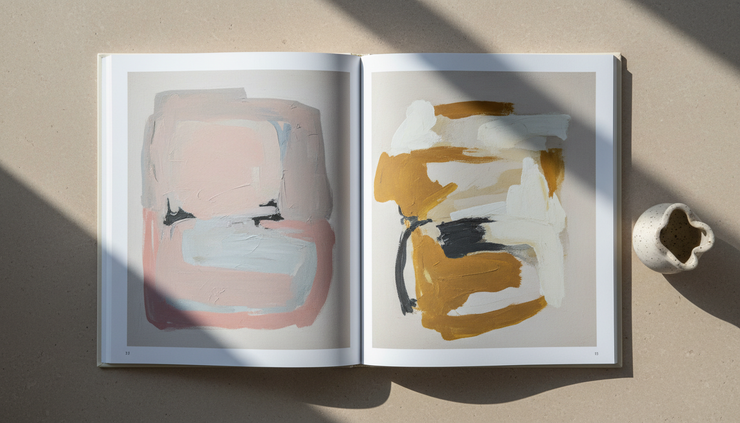
Visual literacy changes how we see value
Value in art is never only financial. It is intellectual, cultural, historical, emotional, material, and civic. Visual literacy gives access to these layers.
A visually literate collector does not rely only on reputation or immediate appeal. They examine quality of thought, command of medium, relation to history, and the work’s capacity to remain alive over time.
A curator uses visual literacy to build relations between works, spaces, audiences, and ideas. The placement of one artwork beside another can create dialogue, friction, harmony, or revelation. Installation is itself a form of visual argument.
A critic depends on visual literacy to write with fairness and force. Criticism should not merely praise or dismiss. It should make seeing more exact.
A viewer uses visual literacy to move beyond passive consumption. The gallery becomes less intimidating. The screen becomes less dominant. The artwork becomes less distant.
This shift is practical. It changes what people notice.
They begin to see how silence operates in a painting. How empty space can be active. How repetition can mark trauma or devotion. How scale can address the body. How colour can carry cultural memory. How material can preserve labour. How an image can reveal power even when it appears calm.
They also learn to recognise when an image manipulates response too easily. Excessive drama, borrowed seriousness, sentimental effects, and decorative complexity can all produce a false sense of depth. Visual literacy does not make the viewer cynical. It makes the viewer awake.
The discipline of slow looking
Slow looking is not a romantic escape from modern life. It is a method.
To look slowly is to let the work set part of the pace. It means resisting the urge to photograph first and see later. It means allowing uncertainty to remain for a while. It means noticing how perception changes after one minute, five minutes, or half an hour.
A useful method is simple.
Start with description. Name what is visible without interpretation. Move from the whole to the details. Notice colour, light, composition, texture, material, scale, and placement.
Then ask how the work is built. Look for repetition, contrast, balance, disruption, rhythm, and tension. Ask what the eye does first, and where it goes next.
Then consider context. Think about medium, date, place, tradition, subject, and possible references. Avoid reducing the work to biography or theme alone. Context should widen the reading, not replace looking.
Then test meaning. Form several possible interpretations. Let them compete. Return to the artwork for evidence.
Finally, notice your own response. Do not treat emotion as proof. Treat it as information. Ask what in the work produced that response.
This process is simple, but it changes the quality of attention. It turns looking into a conversation. It also respects the artwork as a made thing, not just an image to be consumed.

A necessary skill for the present
Visual literacy belongs at the centre of cultural life. It helps people navigate digital overload, distinguish serious art from visual noise, develop critical and emotional intelligence, and communicate across cultures and technologies.
It also restores dignity to attention.
The world will not become less visual. Images will become more numerous, more mobile, and more difficult to verify. Some will enlighten. Some will distract. Some will move across cultures with care. Others will strip context away. Some will deepen perception. Others will imitate depth.
The answer is not to reject images. The answer is to learn how to see.
A visually literate culture does not treat art as a luxury or an ornament. It recognises art as a training ground for perception. In front of a serious work of art, the viewer practises skills that matter everywhere: attention, judgement, empathy, memory, doubt, and interpretation.
To see well is to think with greater care. To think with greater care is to live less easily governed by noise.


Comments