


Museums Today: Guardians of Heritage, Engines of Dialogue

A museum is no longer a silent room built around the past. It is a thinking space, a civic space, a public classroom, and a cultural conscience. It still protects objects, paintings, archives, and fragments of history, but its work now reaches far beyond storage and display.
The modern museum has moved from the idea of the guarded cabinet to the idea of the open forum. It collects, conserves, questions, teaches, hosts, translates, digitises, and connects. It works with memory, but it also works with the present. It frames beauty, conflict, identity, belief, science, migration, labour, ecology, and time itself.
For a contemporary art audience, the role of museums today is not simply to preserve what has already been made. It is to shape how culture is seen, shared, argued with, and carried forward.

1. Museums preserve cultural memory and artistic heritage
Museums remain guardians of memory. This responsibility has not weakened, even as their public role has expanded. Paintings, sculptures, drawings, manuscripts, textiles, design objects, photographs, film, sound works, and digital files all need care. Without trained conservation, sensitive storage, research, and interpretation, much of cultural history would become fragile, silent, or lost.
Preservation is not passive. It is an active form of cultural intelligence.
A painting is never only pigment on canvas. It carries the hand of the artist, the time of its making, the materials available, the market that framed it, the institutions that accepted or rejected it, and the political atmosphere in which it lived. A ceramic vessel, a ritual object, a print, or an installation can hold evidence of trade, belief, migration, technology, and social order.
Museums read these objects as witnesses. They allow one generation to encounter the decisions, freedoms, limits, and visions of another.
This is especially important in fine art, where visual culture often survives long after language has changed. A medieval panel, a modernist canvas, or a conceptual work from the late twentieth century may speak across distance without reducing that distance. The museum protects that distance. It prevents the past from being flattened into decoration.
Preservation also includes context
Good preservation does not end with climate control and careful handling. It also includes:
clear records of ownership and movement
research into materials and techniques
study of social, political, and cultural setting
attention to works that were neglected or misread
ethical care for objects with complex histories
This is where art preservation becomes an intellectual act. To preserve a work is to preserve the conditions that help people understand it. The label, archive, catalogue, wall text, audio guide, conservation note, and public lecture all matter. Together, they build a bridge between the object and its future viewers.
Museums also face difficult questions about what should be held, returned, restored, repaired, or left visibly damaged. These questions are not secondary. They sit at the centre of serious museum work. A crack, an absence, a faded surface, or an unresolved ownership history may reveal as much as a fully restored object.
Preserving heritage now means preserving truth as well as beauty.
2. Museums serve as interactive learning and multidisciplinary platforms
The museum has become one of the most powerful learning environments outside the formal classroom. It brings together visual art, history, science, philosophy, architecture, performance, literature, technology, craft, and public debate. This makes it a rare space where knowledge does not sit in one discipline.
A contemporary exhibition might connect painting with astronomy, sculpture with ecology, photography with colonial history, or installation art with ideas of space and time. In this way, the museum becomes a platform for seeing relationships. It encourages visitors to move between object and idea, sensation and analysis, personal response and shared meaning.
This matters because art is not an isolated language. It is shaped by everything around it. A canvas may hold traces of political change. A video work may question memory. A sound installation may reshape how the body understands space. An archive display may change the meaning of a well-known painting by showing what was left outside the frame.
The museum gives these connections a physical form.
Learning through encounter
Traditional education often moves from explanation to example. Museums often reverse the order. The visitor meets the object first. Then questions begin.
Why this scale? Why this material? Why this subject? Why this silence? Why this violence? Why this colour? Why this placement in the room?
This kind of learning is direct. It starts with attention. It trains the eye before it asks for agreement.
Interactive museum practice has developed from this principle. Workshops, artist talks, open studios, handling sessions, listening spaces, guided conversations, performance programmes, family learning, and research displays all expand the museum experience. These activities do not replace the object. They widen access to it.
The best museums do not turn art into simple explanation. They create conditions for deeper looking.
A strong museum does not answer every question. It teaches people how to ask better ones.
For contemporary visual art, this is essential. Many works do not offer instant clarity. They may deal with abstraction, duration, memory, identity, systems, or material experiment. The museum helps viewers stay with complexity without feeling excluded by it.
The museum as a space for slow attention
In a culture shaped by speed, the museum defends slowness. It gives time a visible structure. A room can hold centuries. A sequence of works can place one artist in dialogue with another across decades. A single object can ask for ten minutes of looking rather than ten seconds of recognition.
This is not nostalgia. It is discipline.
For collectors, curators, and committed art readers, this slow attention is part of the museum’s highest value. It teaches judgement. It refines comparison. It reveals influence, rupture, repetition, and risk. It helps the eye understand why one work endures while another belongs mainly to fashion.

3. Museums foster community engagement, social dialogue, and critical thinking
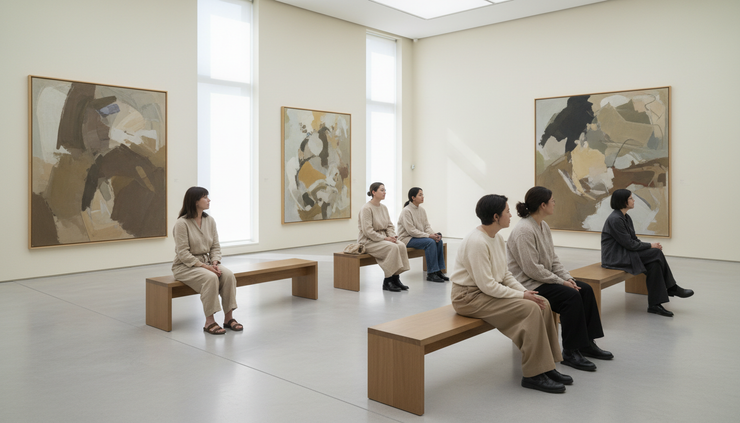
Museums are public institutions in the broadest sense. They hold collections, but they also hold conversations. Their authority no longer rests only on possession. It rests on trust, openness, care, and the ability to create meaningful public exchange.
This is where museums and community engagement become inseparable. A museum that speaks only to itself becomes narrow. A museum that listens to its communities becomes alive.
Community work can take many forms. It may mean working with local artists, schools, cultural groups, researchers, elders, disabled visitors, youth groups, migrant communities, or people whose histories are represented in the collection. It may involve co-created displays, public discussions, oral history projects, artist residencies, neighbourhood partnerships, or free learning programmes.
At its strongest, community engagement does not treat people as an audience to be instructed. It treats them as participants in meaning.
Museums can hold difficult dialogue
Museums are especially valuable because they can provide a structured space for difficult subjects. Art can approach what public debate often reduces. War, displacement, ecological loss, race, class, gender, faith, memory, grief, and power can appear in museums with depth and form.
The gallery does not remove conflict. It gives conflict a frame.
A photograph of a protest, a textile made in exile, a painting shaped by trauma, or an installation built from everyday debris can open a form of attention that is different from news, argument, or opinion. It asks viewers to look, not only react. It asks them to consider evidence, form, feeling, and context together.
This is one reason museums matter in democratic life. They help build critical thinking without demanding a single conclusion. They invite comparison. They show that history has layers. They reveal that cultural value is made, challenged, and remade.
Critical thinking is a curatorial responsibility
Every exhibition makes choices. What is shown? What is absent? Which works are placed together? Which history is foregrounded? Which voice explains the object? Which language is used?
These decisions shape public understanding.
A serious museum does not pretend to be neutral in a careless way. It makes its methods visible. It explains why certain works are brought together. It opens space for debate. It allows visitors to understand that display is interpretation, not pure fact.
For contemporary art, this is vital. The museum is often the place where new forms enter public consciousness. When institutions show time-based media, performance, social practice, or hybrid forms that combine painting, architecture, moving image, and sound, they help define how these works will be understood.
This power must be handled with precision. The museum should not dictate meaning. It should build the conditions in which meaning can be examined.
4. Museums promote inclusivity, global representation, and accessibility
The museum of the past often reflected narrow structures of power. Many collections were built through wealth, empire, privilege, and exclusion. Many artists, makers, communities, and traditions were ignored, mislabelled, or treated as secondary to dominant canons.
The contemporary museum must face this history clearly.
Inclusivity is not a decorative policy. It changes what museums collect, display, research, publish, and teach. It asks whose stories have been preserved, whose have been reduced, and whose have been absent altogether. It also asks who feels welcome inside the museum and who still feels that the institution was not built for them.
Inclusive art spaces require more than a broader checklist of names. They require careful thinking about access, language, architecture, ticketing, interpretation, staffing, education, and collection policy.
Representation must be more than visibility
Global representation is often misunderstood as simple variety. A museum cannot solve imbalance by placing isolated works from different regions into an unchanged structure. That risks turning culture into token presence.
Better practice asks deeper questions.
Are works from different regions interpreted through their own histories?
Are artists given intellectual depth rather than surface description?
Are local and global narratives allowed to meet without one dominating the other?
Are living artists part of the conversation?
Are source communities involved when appropriate?
Are difficult histories addressed with care rather than avoided?
Museums that take representation seriously expand the canon without weakening standards. They show that excellence has never belonged to one geography, one school, one market, or one language.
This matters for contemporary museum culture because artists now work across borders, archives, materials, and media. A painter may draw from ancestral memory, digital image culture, classical composition, urban space, and speculative philosophy in a single body of work. A museum that keeps rigid categories cannot read such work well.
Accessibility shapes the whole experience
Accessibility is not only about ramps, lifts, or readable labels, though those are essential. It includes sensory access, clear navigation, seating, audio description, captioning, quiet hours, multilingual interpretation, digital resources, and pricing structures that do not close the door before the visit begins.
A museum becomes public only when the public can truly enter it.
This includes intellectual access. Complex art does not need to be simplified into shallow language. It needs to be introduced with clarity. A good museum text respects the intelligence of the visitor without assuming specialist knowledge. It offers enough context to support looking, while leaving room for discovery.
For audiences engaged with philosophy, time, perception, and contemporary visual culture, accessibility is not a lowering of thought. It is a sharpening of communication.
5. Museums embrace digital transformation and virtual exhibitions
The museum’s future is not only physical, but the physical museum remains irreplaceable. The task is balance. Digital tools can extend access, enrich research, and preserve fragile material. They should not turn the museum into a screen-only experience.
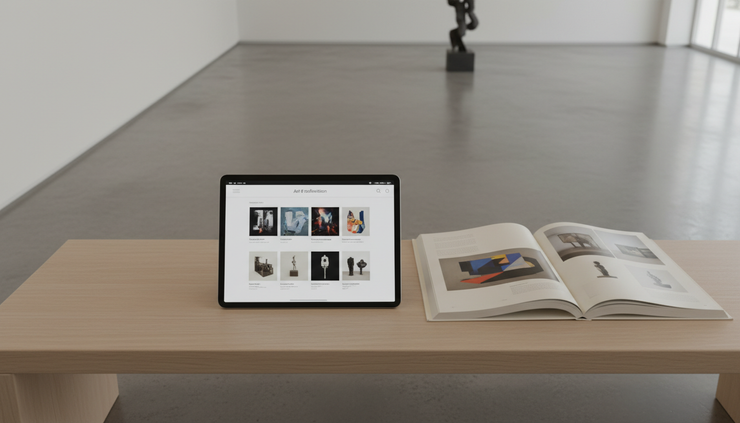
Digital museum transformation has already changed how collections are studied and shared. Online catalogues, high-resolution images, virtual exhibitions, recorded talks, digital archives, 3D scans, conservation imaging, and remote learning have widened the reach of museum work. People can now encounter collections before travelling, after visiting, or from places they may never leave.
This matters for national and international audiences. A student in one city, a researcher in another, a collector abroad, and an artist in a remote studio can all enter the same digital collection. The museum becomes less bound by walls, even as its physical site remains central.
Virtual exhibitions are not replacements
A virtual exhibition can offer scale, sequence, voice, and context. It can bring together fragile works that cannot travel. It can show details invisible in the gallery. It can layer film, sound, archive, and commentary in useful ways.
Yet the encounter with matter still matters.
The surface of a painting, the weight of a sculpture, the temperature of a room, the acoustics of an installation, and the movement of other bodies through space cannot be fully translated online. Digital access should lead back to deeper attention, not replace embodied experience.
The strongest museums understand this. They use digital tools to support the object, not overshadow it.
Digital collections change responsibility
As museums publish more material online, they also face new duties. Digital access must be accurate, respectful, and well maintained. Images need context. Sensitive works need ethical care. Metadata, the information attached to objects, should be clear and responsible. A poorly described digital collection can repeat old errors at great speed.
The digital museum is not lighter than the physical museum. It carries a different kind of weight.
For contemporary art, digital practice also raises questions about time, authorship, and preservation. How does a museum collect a work that changes over time? How does it conserve a file, a performance, an online work, or an installation built from software and hardware that may soon become obsolete? How does it document an artwork without freezing it into a version the artist never intended?
These questions are central to the future of collecting. They show that museums are not only keeping the past. They are learning how to preserve forms of art that are still changing.
The modern museum is a living institution
The museum today stands at a demanding intersection. It must protect fragile heritage and welcome new forms. It must honour artistic achievement and question inherited power. It must serve specialists and first-time visitors. It must care for original objects and build meaningful digital access. It must be calm enough for close looking and open enough for public dialogue.
This is not a contradiction. It is the museum’s contemporary strength.
The old model of the museum as a static storage space could never meet this task. Storage alone cannot explain why art matters. Silence alone cannot carry cultural memory. Authority alone cannot build trust.
The modern museum has become a civic instrument of attention. It helps societies remember, learn, question, include, and imagine. It gives form to time. It allows the past to confront the present without being consumed by it. It gives contemporary art a space where risk can be studied, not merely noticed.
For collectors and curators, this evolution carries a clear message. Cultural value is no longer measured only by rarity, authorship, or market recognition. It is also measured by context, access, dialogue, care, and the ability of a work to remain meaningful across changing publics.
For artists, the museum remains a place of ambition, but also of responsibility. To enter a museum is to enter a long conversation with memory and with future interpretation.
For the public, the museum offers something increasingly rare: a shared space where complexity can remain complex.

A clear future for museums
Museums will continue to change because culture continues to change. Their authority will depend less on the idea of possession and more on the quality of care, interpretation, access, and public trust they provide.
The strongest museums will do five things with discipline:
preserve cultural memory without turning it into nostalgia
create learning spaces that connect art with wider fields of thought
support dialogue without reducing art to opinion
expand representation without lowering intellectual standards
use digital tools without abandoning the power of physical encounter
A museum at its best is not a warehouse of finished meanings. It is a place where meaning is protected, tested, renewed, and shared. That is why museums remain essential. They guard heritage, but they also give culture the room to think.


Comments