


The Alchemy of Earth and Fire Modern Ceramic Design

Ceramics occupy a rare position in contemporary art because they refuse to sit neatly in one category. A vessel can hold water, organise a table, and still carry the formal authority of sculpture. A wall-mounted clay form can echo painting, architecture, geology and ritual without surrendering its material identity. The medium is ancient, but its present force feels precise and current.
At the centre of modern ceramic design is a productive tension: earth shaped by hand, fire governed by chemistry, and form sharpened by contemporary thought. Ceramics ask to be seen, but also felt. They have weight, temperature, grain, edge, skin and silence. That tactile presence gives them a quality that many image-based works cannot easily claim.
This is why ceramics have moved with such confidence into galleries, museums, design collections and private interiors. They carry the memory of functional craft, yet they now speak fluently in the language of fine art sculpture. They can be domestic and monumental, restrained and expressive, primitive in material and exacting in execution.

Raw materials and glaze chemistry give ceramics their tactile force
Clay is not neutral. It carries place, pressure and time. Before it becomes a vessel or sculpture, it exists as sediment, decomposed rock, mineral memory. The ceramic artist begins with a material that already has a history, then alters it through water, touch, air and fire.
This physical beginning matters. Unlike bronze, glass or polished stone, clay records gesture with unusual intimacy. A thumbprint, a dragged tool, a compressed coil, a softened rim, all can remain visible if the artist allows them to. Even a refined porcelain form, seemingly immaculate, carries the evidence of restraint. The surface may look quiet, but the body beneath it has been worked.
That sense of touch gives ceramics a powerful relationship with the viewer. It creates what might be called tactile intelligence. The eye understands the object through imagined contact. We read roughness, smoothness, density and fragility before the hand ever reaches it. This makes ceramics especially potent in a culture saturated with flat images. They restore the authority of surface as something real.
Glaze extends that authority. It is often mistaken for decoration, but serious ceramic work treats glaze as structure, atmosphere and chemistry at once. Silica, alumina, fluxes, oxides and ash behave differently under heat. Some glazes pool like glass. Others crawl, blister, run, crystallise, smoke or dry into a stone-like skin. The kiln does not merely finish the work, it transforms it.
The firing process introduces controlled uncertainty. The artist designs the conditions, but the final surface emerges through heat, oxygen, timing and reaction. In this sense ceramics resist total command. That resistance is part of their dignity. A strong ceramic work is not a manufactured surface applied to a passive object. It is the visible result of negotiation between intention and matter.
Consider the difference between a high-gloss glaze and an unglazed grogged clay body. The glossy surface pulls in light and reflects the room, making the object visually porous. The dry clay body absorbs light, drawing attention to mass and contour. A glaze with iron, copper or ash may appear geological, as though the object has formed over centuries rather than days. A white porcelain skin may feel almost architectural, reducing the form to line, proportion and shadow.
This is where functional craft begins to cross into fine art sculpture. A bowl is no longer only a bowl when its surface becomes a field of mineral reaction. A vase is no longer only a vase when its glaze establishes depth, atmosphere and time. The object remains usable in theory, but its primary force may be contemplative.
The best ceramics do not disguise their making. They reveal it with discipline. They allow the viewer to sense the hand without reducing the work to handmade charm. They show chemistry without turning the surface into spectacle. This balance gives the medium its prestige.
A ceramic object is never just fired clay. It is a record of pressure, touch, heat and decision.
The raw material grounds the work in the physical world. The glaze opens it to chance and transformation. Together, they create a surface that behaves almost like a skin. It protects, exposes, reflects and remembers.
Ceramic forms now act as spatial expressions
A ceramic object is not limited to its own volume. It shapes the space around it. This is especially clear in contemporary practice, where ceramics often move beyond vessel traditions into architectural, installation-based and sculptural forms.
The shift from object to spatial expression does not require scale alone. A small work can command a room through proportion, negative space, aperture and placement. A narrow opening can pull attention inward. A leaning form can unsettle balance. A cluster of ceramic pieces can generate rhythm across a wall or floor. The surrounding air becomes part of the work.
This is one of the reasons ceramics speak so well to current conversations about time and perception. Clay is slow matter. It must be prepared, formed, dried and fired. Each stage has a tempo. Yet the finished object can make that slow process present in an instant. The viewer encounters a compressed record of duration.
In this way, ceramics share concerns with painting and sculpture. Like painting, they deal with surface, light and composition. Like sculpture, they occupy real space and answer to gravity. Their strength lies in combining these modes without becoming dependent on either.
Modern ceramic forms often work through one of several spatial strategies:
The vessel as void
The opening, hollow and interior become active elements. The empty space is not absence. It is held, framed and shaped.
The wall form as relief
Clay moves towards painting, but it breaks the flat plane. Shadows become part of the image.
The floor piece as architecture
Ceramic mass relates to the body and to the room. It can suggest shelter, column, fragment or ruin.
The cluster as field
Multiple ceramic units create intervals. Meaning emerges through repetition and difference.
The suspended or elevated form
Weight becomes visual tension when clay appears to float, lean or hover.
These strategies show how far ceramics have travelled from the assumption that they belong only to table, shelf or hearth. The vessel remains central, but it has expanded. It now carries philosophical weight. It asks what it means to contain, to enclose, to open, to mark, to stand, to endure.

A ceramic sculpture can alter the way a room is perceived because it holds both mass and vulnerability. Clay looks solid, but it can crack. It can seem ancient, yet it may have been made recently. It can be humble in material and severe in form. These contradictions create presence.
That presence differs from the authority of metal or marble. Bronze carries permanence. Marble carries classical weight. Ceramic carries risk. Its material record includes collapse, shrinkage, fracture, repair and survival. The viewer senses that the object has passed through danger. Fire has tested it. That ordeal gives the finished work a quiet intensity.
Spatial ceramics also complicate the boundary between art and design. A large ceramic lamp, for example, may provide light while reading as sculptural architecture. A hand-built chair-like form may resist ordinary use while invoking furniture. A vessel with no practical opening may retain the memory of function while becoming pure form. This productive ambiguity is central to the medium’s current significance.
In contemporary ceramic art, ceramic sculpture, artistic pottery and tactile visual art often overlap rather than compete. The strongest works do not ask for permission to belong to one category. They establish their own terms through scale, surface, use and placement.
Traditional pottery techniques meet minimalist industrial design
The renewed authority of ceramics does not come from abandoning tradition. It comes from using tradition with clarity. Coiling, slab building, throwing, pinching, moulding, slip casting and glazing remain essential methods. What has changed is the visual and conceptual framework in which those methods operate.
Traditional pottery techniques carry a long history of utility. They are linked to food, storage, ceremony, trade and domestic life. Minimalist industrial design brings a different set of priorities: reduction, repeatable form, clean proportion and attention to the relationship between object and environment. When these approaches meet, ceramics gain a distinct contemporary charge.
This union can be austere without becoming cold. A thrown cylinder may appear almost machined, but the slight compression of the base or softness of the lip reveals the hand. A slab-built box may recall industrial geometry, yet its surface keeps the grain of clay. A slip-cast form may repeat with precision while each glaze outcome remains singular.
The result is not a rejection of craft. It is craft brought under pressure.
Minimalist ceramic design often works through restraint. It reduces the palette, trims the silhouette, and allows proportion to carry meaning. A single curve becomes decisive. A foot ring matters. A rim thickness changes the whole reading of the piece. The smallest choices become visible because there is nowhere for them to hide.
This is where ceramic work can achieve a rare level of refinement. The object does not need ornament to feel complete. It needs judgement.
Key principles define this meeting of old technique and modern clarity:
Hand process remains visible
Form takes priority over decoration
Material honesty matters
Function becomes open-ended
The work may be precise, but it should not erase all evidence of touch.
Surface supports the object’s structure rather than distracting from it.
Clay should not pretend to be plastic, metal or stone unless the work makes that tension meaningful.
A piece may serve use, ritual, display or contemplation, sometimes at once.
This approach has strong appeal because it lets ceramics participate in modern interiors and serious collections without becoming merely decorative. The work can sit beside painting, furniture, textiles, books or sculpture and still keep its own gravity.
The industrial reference is not always literal. It may appear as a disciplined edge, a modular system, a repeated unit, or a muted surface. A ceramic object can borrow the clarity of manufactured design while retaining the depth of fired clay. That contrast is crucial. If the work becomes too polished, it loses material resonance. If it leans too heavily on rustic irregularity, it may lose formal authority.
The most compelling examples hold both positions. They are exact, but not sterile. They are handmade, but not nostalgic. They understand history, yet refuse to imitate it.
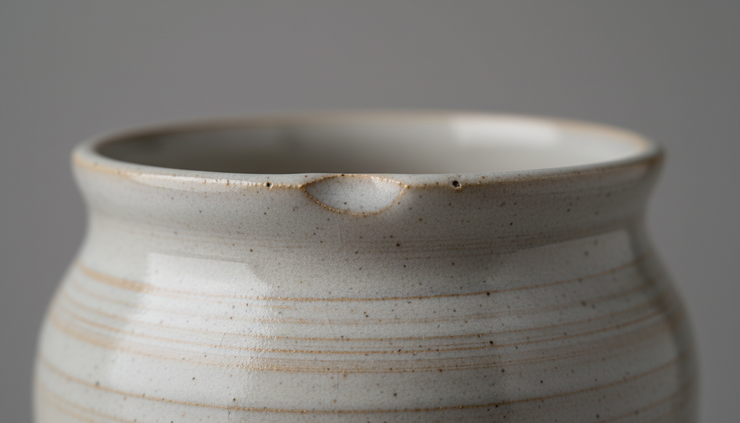
This tension is especially visible in the vessel. For centuries, the vessel has been a practical form. It also carries symbolic depth. It can suggest the body, shelter, offering, silence and containment. Modern ceramic artists and designers use this history without relying on it too heavily. They refine the shape, alter the scale, close the opening, exaggerate the foot, flatten the profile or repeat the form in series.
By doing so, they allow pottery to enter sculptural territory. The object still remembers use, but it no longer has to serve it. This is not a failure of function. It is an expansion of meaning.
The same principle applies to tile, wall relief, lighting, furniture and architectural ceramics. Traditional processes become tools for spatial thinking. A repeat tile system can become a sculptural wall. A ceramic screen can filter light. A lamp can alter atmosphere through both material and illumination. These works occupy the boundary where design and fine art meet, and they do so with unusual confidence.
Ceramics are returning to contemporary art spaces with force
The revival of ceramics in galleries and museums is not sudden. It has built over time through changes in taste, collecting practice, art education and cultural attention to material knowledge. The medium has gained renewed visibility because it answers several needs at once.
First, ceramics restore the authority of the object. After long periods in which art discourse often favoured image, concept, performance and digital circulation, clay offers physical resistance. It has mass. It breaks. It ages. It occupies space without apology. This does not make it less intelligent. It makes its intelligence material.
Second, ceramics complicate old hierarchies. Western art institutions historically placed painting and sculpture above craft, with pottery often confined to decorative art or ethnographic categories. That division now appears increasingly narrow. Serious artists, curators and collectors recognise that material skill and conceptual depth can exist in the same work. A hand-built vessel can think as rigorously as a painted canvas. A glazed relief can address space, perception and memory with the force of sculpture.
Third, ceramics connect contemporary art to global and local histories without needing grand declarations. Almost every culture has ceramic traditions. Clay vessels, tiles, figures and ritual objects appear across continents and centuries. Contemporary ceramics can draw on this long human record while addressing present questions of identity, ecology, domesticity, labour and permanence.
This breadth gives the medium strength. It is not tied to a single school or aesthetic. It can be austere, expressive, architectural, figurative, abstract, functional, ceremonial or conceptual. It can stand alone or enter dialogue with painting, textile, video, sound and installation.
The revival also reflects a growing respect for process. Audiences increasingly understand that material transformation is not secondary to meaning. In ceramics, process is meaning. Drying, firing, glaze testing and kiln atmosphere all shape the final work. The time invested in the object becomes visible as a form of thought.
For collectors, this creates a distinctive form of engagement. Ceramic works reward close viewing. They reveal themselves slowly through surface variation, weight of line, finger marks, glaze movement and the rhythm of form. They can also sit within living spaces with unusual ease, not as accessories, but as works that change with light and proximity.
For curators, ceramics offer rich exhibition possibilities. They can be grouped by material language, firing method, geography, form, function or theme. They can stand in dialogue with painting through colour and surface, with architecture through scale and placement, and with philosophy through questions of time, containment and transformation.
The renewed visibility of ceramics also reflects a wider reconsideration of labour. Clay work asks for patience and skill. It does not accept haste easily. The maker must understand moisture, thickness, shrinkage, balance and heat. This knowledge cannot be faked by surface styling. It must be practised.
That fact gives ceramics an ethical presence. They remind us that form has consequences. A wall too thin may warp. A join too weak may split. A glaze too fluid may run beyond control. Every decision carries physical risk. This makes the completed object feel earned.

Ceramics bridge use and contemplation without losing either
The most interesting ceramic works do not ask us to choose between craft and fine art. They show that the boundary itself is fertile. A pot can be functional and intellectually serious. A sculpture can carry the memory of service. A plate can be a field of glaze, a relief, or a meditation on daily ritual.
This matters because function is not an artistic weakness. Use can deepen meaning. The memory of holding, pouring, containing or serving gives ceramics a bodily scale. Even when a work is no longer meant to be used, that memory remains. The viewer recognises the gesture. The hand understands the form before the mind classifies it.
Fine art sculpture often seeks autonomy, an object existing for contemplation. Functional craft often seeks service, an object shaped by touch and need. Ceramics can hold both. They can invite contemplation precisely because they know use.
This dual status explains why they feel so alive in contemporary spaces. A ceramic object can sit on a plinth and still resist the chill of pure display. It can enter a home and still resist being reduced to décor. It brings the gallery and the table into conversation.
The same is true of scale. A small work can feel monumental if its proportions are exact. A large ceramic installation can feel intimate because clay carries the trace of the hand. This crossing of scales gives ceramics unusual emotional range.
Ceramics also speak to the present because they challenge the speed of visual culture. They cannot be fully understood by quick scanning. Photographs flatten them. Screens miss their weight, depth and surface change. To encounter a ceramic work properly, one must adjust position, notice light, imagine touch and register silence.
That slow attention is not a retreat from modern life. It is a discipline within it.
The alchemy remains contemporary
The phrase “earth and fire” risks sounding romantic, but in ceramics it remains exact. Clay comes from the ground. Fire changes it irreversibly. Between those facts lies one of the most intelligent material practices in art.
Modern ceramic design has earned its place in contemporary culture because it brings together qualities often treated as separate: utility and abstraction, hand and system, surface and structure, tradition and experiment, domestic scale and sculptural ambition. It does not need to abandon the pot to become art. It does not need to reject sculpture to honour craft.
Its strength lies in transformation. Raw matter becomes form. Chemistry becomes surface. Function becomes memory. Space becomes active. The object carries all of this visibly and physically.
For collectors and curators, ceramics now offer more than a renewed category of interest. They offer a way to think about art through touch, time and presence. For cultural readers, they provide a clear answer to a larger question: how can ancient materials still speak with contemporary force?
The answer is in the object itself. A fired ceramic work is never only an artefact of technique. It is an encounter between control and accident, body and space, history and the present moment. It stands where craft becomes sculpture, and where sculpture remembers the hand.


Comments